Chow Chiu Leung Peter
76th WMA General Assembly
It was a wonderful pleasure to participate in the 76th General Assembly of the World Medical Association (WMA) in Porto, Portugal from 8 to 11 October 2025 on behalf of SMA. SMA is a Constituent Member of WMA and was invited to attend the General Assembly together with the national medical associations of the world.
WMA organises multiple committee meetings annually across the globe to foster discussion among nations with diverse economic and cultural backgrounds. National representatives play a vital role in giving their voices on international issues in relation to health and human suffering. Issues discussed in committee meetings are put up in the Assembly for attending members to review and refine. WMA has released numerous significant documents over the years, such as the International Code of Medical Ethics and the Helsinki Declaration of Research Ethics. Meanwhile, contemporary pressing issues, like international conflicts and infectious disease outbreaks, are tabled at each General Assembly.
The main Assembly spanned four days, during which representatives heard the concerns and opinions raised by the Medical Ethics Committee, Financial Committee, and Social and Welfare Committee. Representatives have equal rights to present their support and worries, and every speech was translated in English, French, Chinese, Spanish and Japanese. Despite differing viewpoints, the discussions were generous, constructive and, above all, full of compassion and empathy for humans around the globe.
After addressing the meeting agenda, a ceremony of great significance began. Representatives of all national medical associations were called upon to show their participation and involvement in WMA. It demonstrated a great sense of unity and the collective will to maintain the mission of WMA – to serve humanity by endeavouring to achieve the highest international standards in medical education, medical science, medical art and medical ethics, and health care for all people around the world. Dr Jacqueline Kitulu of Kenya, the 2026 WMA President, then took the baton from Dr Ashok Philip, 2025 WMA President. Dr Kitulu is the first ethnic African to be WMA president.
An afternoon was allotted for a scientific conference on the governance of artificial intelligence (AI) in healthcare, delivered by speakers from WMA and the Portuguese Medical Association (PMA). Dr Ramin Parsa-Parsi of the WMA Medical Ethics Committee reminded us that the use of new technology should align with the basic ethical principles held by WMA: autonomy, beneficence, non-maleficence, justice, dignity and respect for human life. The talk was both insightful and fundamental to the application of AI in healthcare.
Connecting with the global community
Porto, the second-largest city in Portugal, is not only famous for being the origin of port wine but also for being a major port in the era of the Age of Discovery. Our host, the PMA, arranged many dinners for the attendees, including a great boat trip on the Douro river. On that lovely sunny evening, we enjoyed fish, port wine and fado music.
Alongside the serious ethical and social issues discussed in the Assembly, we had amazing chats, beautiful photos and warm friendships with doctors from around the world. As someone who was born and raised in Hong Kong and has lived in Singapore for nearly 20 years, it was an especially wonderful time meeting the big team of delegates from the Hong Kong Medical Association. We shared not only the different challenges faced by doctors in both cities, but also our many similarities and, most of all, we shared a great deal of fun!
Maxz Ho
WMA Junior Doctors' Network
The WMA Junior Doctors' Network (JDN) Fall Meeting was held in conjunction with the WMA General Assembly in Porto, Portugal, from 6 to 7 October 2025 at the PMA's office.
I had the privilege to represent the SMA Doctors-in-Training Committee for this occasion. The discussions centred on "Junior Doctors' Working Conditions", where representatives from 14 countries shared data and perspectives on working hours and current challenges that junior doctors face. The conversations took place against the backdrop of two multicentre research studies with similar objectives to gather global data on junior doctors' working hours, rest periods and satisfaction levels – the WMA JDN's Global Working Time Study and the European Junior Doctors Association's REST-JD Report.
Reflections on the world
It was truly an eye-opening experience to learn more about the different working conditions that junior doctors around the world face. For example, the junior doctors in Europe have a legal limit of 48 working hours per week (albeit in practice, compliance is not optimal). Yet in Asian countries such as Korea, Thailand and Singapore, the guideline is set at 80 hours per week. Through these conversations, I distilled three key reflections.
Firstly, the challenges that junior doctors face transcend geographical boundaries. Although there are systemic differences between healthcare systems, the broader issues we struggle with are fairly similar. Prolonged working hours, remuneration and access to postgraduate training opportunities were some of the common recurring themes across the sharings. These issues cumulate in an overall increased burden on junior doctors, with clear downstream effects on individuals' mental health.
Second, I was reminded that we must never take our sociopolitical stability for granted. Speaking with friends from countries facing political unrest, economic instability or conflict was humbling. Many of them shared about the security concerns junior doctors live with, the frequent disruptions to their training and the constrained resources that they have to work with. Singapore's sociopolitical stability is built on a cohesive social fabric with strong governance. We must never allow complacency to erode this foundation. Additionally, the tripartite partnership between the Ministry of Health, MOH Holdings and SMA underscores the need for a collaborative approach in addressing challenges faced by junior doctors.
Thirdly, I got to witness firsthand the importance of in-person connections. In my role as the Medical Association of South East Asian Nations (MASEAN) JDN Secretary, connecting with our MASEAN counterparts at this international forum has been a meaningful and well-timed opportunity. It was a joy to reconnect with familiar faces from the previous MASEAN meeting, and to forge new friendships with passionate doctors from all over the world. More importantly, through this meeting, we connected with representatives from Philippines and Myanmar and invited them to join MASEAN JDN. With their inclusion, we now have eight of 11 MASEAN members represented. This is an encouraging milestone towards achieving full representation across the region.
The WMA JDN Fall Meeting concluded with the election of the new WMA JDN management team, followed by a smooth transition into the WMA General Assembly – where a JDN alumnus was elected as the WMA's Associate Members Chairperson. It is heartening to see members of WMA JDN continue to contribute actively to the wider WMA community. I wish nothing but the best for this dedicated network and offer my advance congratulations as JDN approaches its 15th anniversary in 2026.
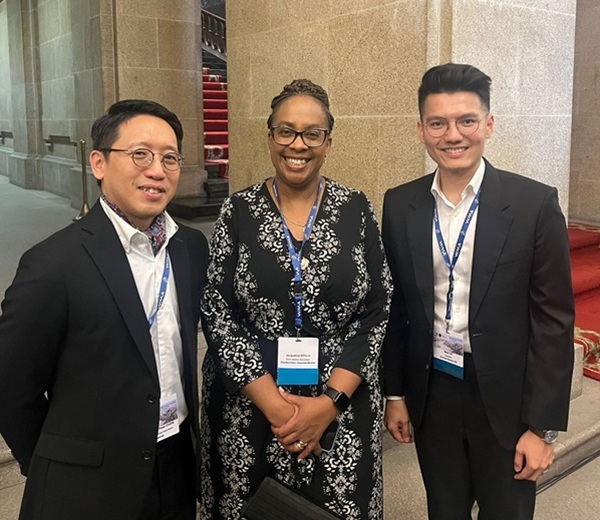
Dr Chow Chiu Leung Peter and Dr Maxz Ho with World Medical Association President Dr Jacqueline Kitulu
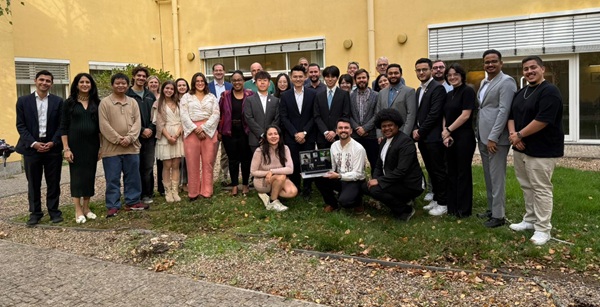
Members at the World Medical Association Junior Doctors Network Fall Meeting 2025
